
Training benefits
What structured training can build
Regular strength training gives adults a practical way to build muscle, improve control, and support the physical demands of everyday life.
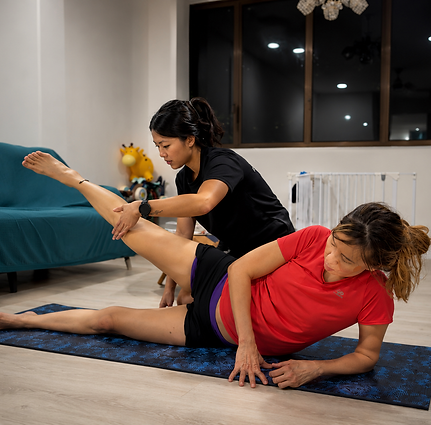
When training is progressed carefully, it can build the leg and trunk strength that supports steadier movement and greater confidence on your feet. It can also support the strength behind everyday moments, like standing from a chair, carrying bags, walking comfortably, or travelling with more confidence. Your specialist builds these qualities gradually, at a pace that is right for you.
These benefits remain available to you throughout adulthood. The important starting point is a programme that respects your current capability and progresses with care.
3-8%
Regular strength training can rebuild 3 to 8 percent of muscle mass per decade after 40, muscle that would otherwise be lost.
More steady movement
Regular strength and balance training can help older adults build the leg strength, control, and confidence that support steadier movement and reduce fall risk.
30%
Lower risk of serious illness and early death in adults over 45 who train regularly with weights
Reversible
Muscle loss from years of inactivity is not permanent. You can rebuild it at any age with the right programme.
Walking
How strength training complements walking
Walking is a valuable form of activity. Strength training complements it by providing the progressive resistance needed to build the muscles that support lifting, stairs, carrying, and more controlled movement.
With structured resistance work, your specialist can help you build strength, support movement quality, and develop more confidence in the years ahead.
Past 60
What good training looks like after 60
Good training in later life is structured, progressive, and individual. It begins with your health context, current movement, and the activities you want to keep doing. Your specialist select exercises that are appropriate for you, then adjust them as your strength and confidence develop.
Start with a complementary consultation call. We will listen to your situation, answer your questions, and discuss whether First is the right next step for you.
Programming
Together, we build the right approach
01
Understanding you
On the first meeting, we seek to understand your issues and concerns, your current capabilities and what you want to be able to do. This gives us a considered basis to start planning for the work ahead.
02
Making a plan together
Our specialist works with you to agree the focus, pace, and progression of your programme. The plan is clear from the beginning and shaped around you.
03
Adjusting along the way
Progress is not always linear. Our specialist constantly reviews how the programme feels, how you are moving, and how your strength is developing, then makes thoughtful adjustments as needed.
Experience
Experience across various conditions

Muscle Weakness

High Blood Pressure

Osteoporosis

Lower Back Pains

Injury Recovery

Poor Cardiovascular Health

Joint Pain

Type 2 Diabetes
